The Story That Took Nikola Bone to the East
Seymur Oruc
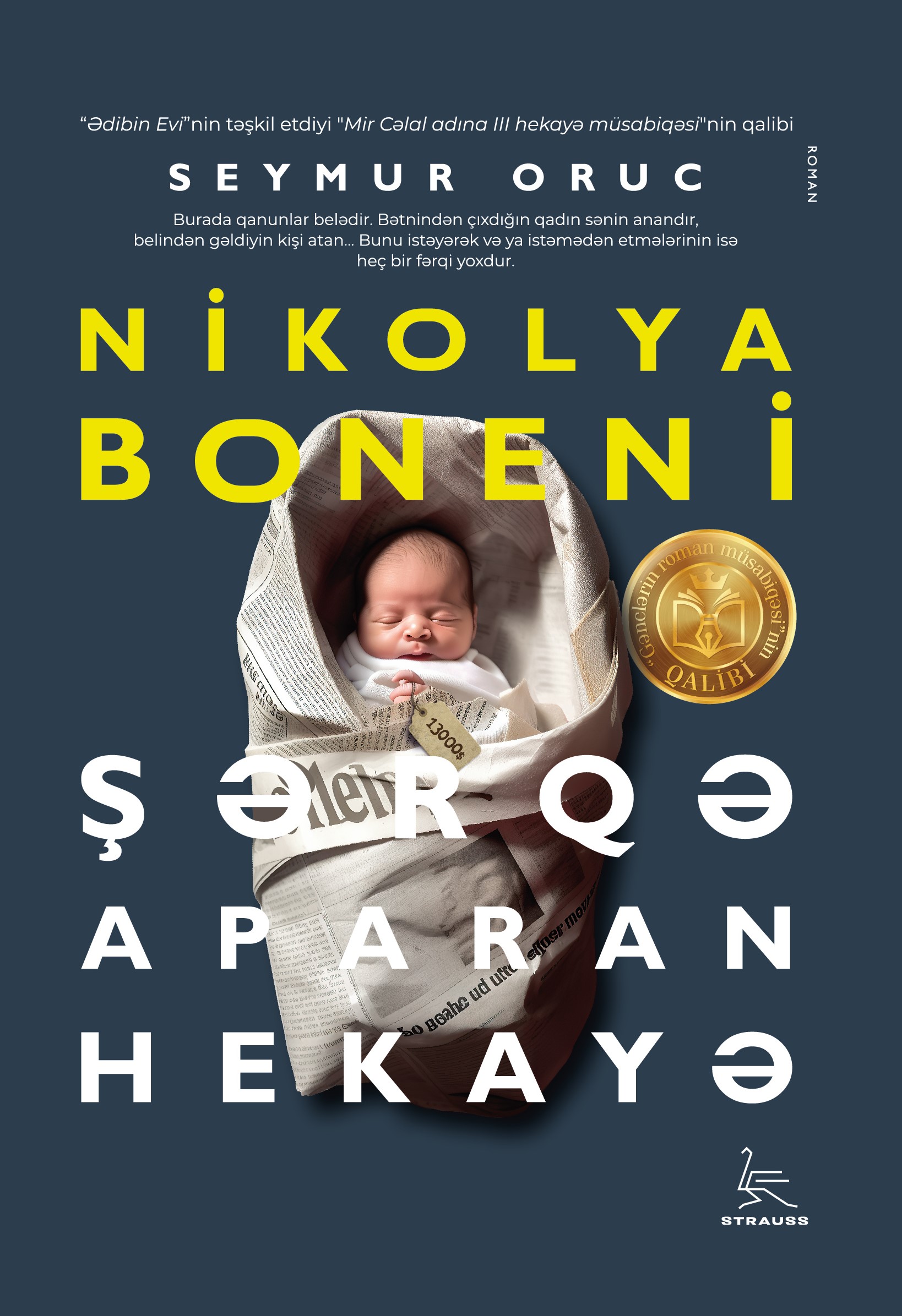
The impressions a book leaves on me determine the tone in which I write about it. I'll share my impressions below, but as I was reading, one thought kept echoing in my mind—and with your permission, I'll begin with that: one should never write a novel about things one doesn't understand.
Since the protagonist's original name is Nicolas Bonnet, it ought to appear in Azerbaijani as Nikola Bone; however, in the book (Strauss Publishing, first edition, 2023) it is written as Nikolya. As I have already provided the publisher with a detailed list of linguistic and typographical errors concerning French, I won't repeat them here—only correct the title in my own essay.
The narrative is told in the first person. The events begin in France and unfold across England, Azerbaijan, and Armenia. The story itself isn't bad at all—it's engaging—but The Story That Took Nikola Bone to the East is, in a sense, a rather naïve novel. A man named Nikola discovers that his parents aren't his biological ones and that he was illegally purchased as a baby; he then sets out to find his real parents. This quest draws the reader in—you read it through without boredom. Moreover, from the very beginning Nikola confesses to having committed a crime, which heightens the intrigue. In fact, he commits two murders with his own hands and is responsible for two others; in total, four people die as a result of Nikola's actions.
Mystery, as a narrative element, is something many contemporary writers in our literature have neglected—yet it is crucial. Especially today, when authors hope to tear readers away from their phones, they must not write novels devoid of enigma or curiosity. For instance, in The Songs of Goats, which I recently reviewed, there wasn't a single moment of suspense or intrigue that would compel one to turn the page. Seymur Orudj succeeds here: his story does make the reader want to know what happens next.
However, the novel also suffers from serious flaws. The first—and for me the most jarring—is the infiltration of Turkish soap-opera vocabulary into the Azerbaijani language. For example, on page 8, sıxılmaq is used instead of darıxmaq (“to miss” or “to long for”); on page 9, we find qos-qocaman; on page 11, coğrafiya qismətindir (“geography is your fate”); on page 64, masanın üstündə sızıb qaldı (used to mean “fell asleep”); on page 78, məni şaşırtdı (“surprised me”), and many others. It's unpleasant to read. It feels as if the book were written not by an Azerbaijani author, but by Said's Ulviya.
The second, equally troublesome issue lies in the author's assertions—his “truths.” His reflections on marriage, tradition, capitalism, and democracy, channeled through Nikola's voice, create in my mind a single conclusion: he doesn't know what he's talking about.
In the novel, Nikola is a journalist—first at Le Parisien, later at Reuters. During the April battles for Karabakh, he writes an article so powerful that it throws everything into turmoil: Azerbaijan trembles, Armenia rejoices. An Azerbaijani journalist named Emin Azimov even writes to him: “It's impossible not to envy the power of your words, impossible not to be astonished at the storm they've stirred here. To wield such force—surely it must feel magnificent.”
And yet, we never see that article in the book. It should have been there—absolutely. We too should have read the piece that “shook the East.” But it's missing. Likewise, when Nikola travels to Azerbaijan and Armenia to prepare another report, he promises his editor an extraordinary piece upon return—yet that article never appears either.
Nearly all the author's claims about France and the French are mistaken. Through Nikola's voice, Orudj portrays the protagonist as a contrarian journalist who says that pleasing the public is easy: just write about fashionable topics, criticize the East, side with the West. But in the same spirit of contrarianism, the author himself succumbs to bias—especially in handling the most sensitive issue for Azerbaijan: the Armenian–Muslim conflict. When Nikola visits Armenia, his host—a drunken Armenian—behaves boorishly, mocking his wife's ignorance of English and insulting her for sport. In Azerbaijan, however, Nikola is received by cultured, articulate, intellectual people. That, to me, is no way to struggle. It honors neither literature nor authorship.
It is precisely because we persist in such shallow portrayals that, today, Armenian writers appear—year after year—at the world's most prestigious book fairs with “illuminating” works on the Armenia–Azerbaijan conflict. I've seen them myself, with genuine regret, at the Geneva Book Festival. Meanwhile, we can barely get published in our own country. The issue isn't in depicting Armenians as vile or uncouth; rather, if an author wishes to prevail in the struggle, it would be better to write a good novel than a poor one that insults. I believe the novel might have ranked higher in competition (it placed second) had it been free of such contrived and meaningless elements. This is how we lose—little by little.
The novel also contains numerous logical inconsistencies. Nikola is told that his parents were Azerbaijani, that someone acted as a middleman, and that an Azerbaijani family had sold their child to a French couple. Later it turns out they didn't sell him—they were taken prisoner, and Armenians sold the child. Then it turns out the boy wasn't theirs at all—the Armenian seller had kidnapped him from another Armenian family. So Nikola was Armenian all along. Reading this, I had to ask: if the seller knew the child was Armenian, why hide it from the French buyer? Was the French couple specifically seeking an Azerbaijani child? Why did it have to be Azerbaijani for the deception to matter? The entire transaction was illegal anyway—why falsify “prisoner” documents? And how exactly was the child transported to France? Through what route? It's practically impossible. How did they get a child with no verified identity across customs? Where, exactly, is all this happening? Let's say there was chaos in Armenia—fine—but how did they smuggle the child into France? Or rather, the children?
The section in which Nikola questions Azerbaijani journalists is excellent. Later he learns that his parents were indeed prisoners of war and that he had been sold not by Azerbaijanis but by Armenians. That scene is powerful—it impressed me deeply.
In sum, The Story That Took Nikola Bone to the East is an engaging novel, worth reading. As we continue to read and share honest impressions, the flaws will be corrected. Published by Strauss, the book's production quality and design are of a very high standard—it's a pleasure to read.