Orion 51
Ruzigar Alekbar
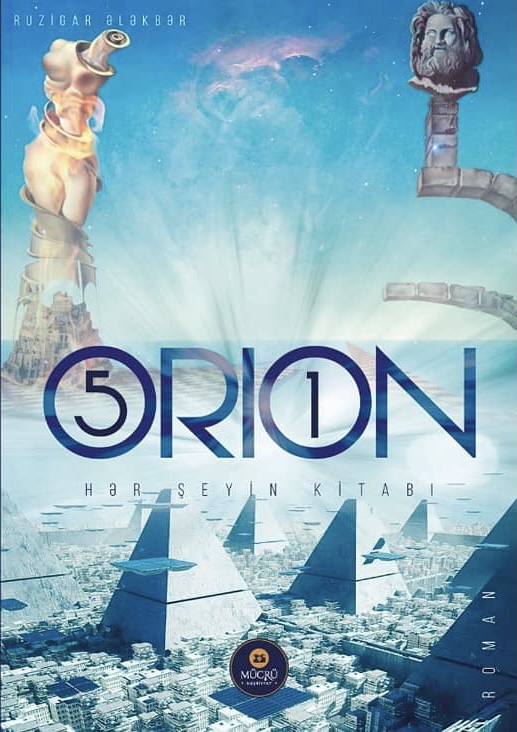
Ruzigar Alekbar's novel, “Orion 51,” is a work of fantasy (science fiction) that is, to put it mildly, a strange novel. The novel concerns the experiences of a protagonist named Lefteris, who “lives” in the period after the Third World War. In my opinion, it begins very well, then loses some of its tempo, tires the reader slightly in the middle, only to become interesting again toward the end before concluding in a peculiar fashion. The work contains many elements that compel the reader to think, and at times to research, which speaks to the author's intellect, the depth of his worldview, and his capacity for fantasy—for invention. For lovers of the science fiction genre, which is widely read today and increasingly in demand, the book is made compelling by its elements: new worlds, new characters, and dreams that, while perhaps unconnected to each other, are linked in an intriguing manner. As we “journey” to other stars and worlds—which are not described in minute detail (in truth, I would have preferred more precise descriptions), and whose appearance is perhaps entrusted to the reader's own imagination—the author also touches upon matters of the human inner world, exploring the roles that trauma, fear, and desire play in our psychology.
The text has problems with proofreading and editing. It would have been much better if a little more unhurried care had been given to the text. Furthermore, I could not bring myself to like the dialogue. From the beginning of the book to the end, the dialogue sections were what pulled me out of the work. At times, the characters' conversations seemed like a poor translation into our language from a Turkish dub of a foreign film. I also believe the novel could have been shortened somewhat with good editing. As enjoyable as the read is, in my opinion, nothing would be lost if certain parts were excised from “Orion 51.”
What I loved most about the novel was the author's emphasis on intellect and thought. The book features everyone from Einstein to Anaximander... And many of these great figures appear in a single scene, at the center of a single debate. This is a fascinating scene in the work and, in my view, successfully executed. Beyond this, the author employs special techniques in the narrative flow; as the novel progresses, you realize that something you read just moments before actually carries a completely different meaning, and this pattern continues right to the end.
In “Orion 51,” Ruzigar Alekbar is not content merely to guide us through interesting and strange worlds, or through dreams that “massage” the human brain; he also attempts to engage with “grand” subjects such as the course of human history, the emergence of religions, and the policies pursued by nations, urging the reader to ponder these matters as well.
If we disregard some of the dull scenes and dialogues that pile up in the middle of the novel—which at times border on the insipidity of a newspaper article—“Orion 51“ can be considered a success. It is an interesting novel that can be confidently recommended to science fiction enthusiasts. I know that Ruzigar Alekbar will go on to write novels that are far more beautiful, far deeper, and far more readable, and we will once again read them with pleasure.
I wish the author success and hope his creative work continues.