The Qizilbash: Awakening
On Khan Hasan’s Novel
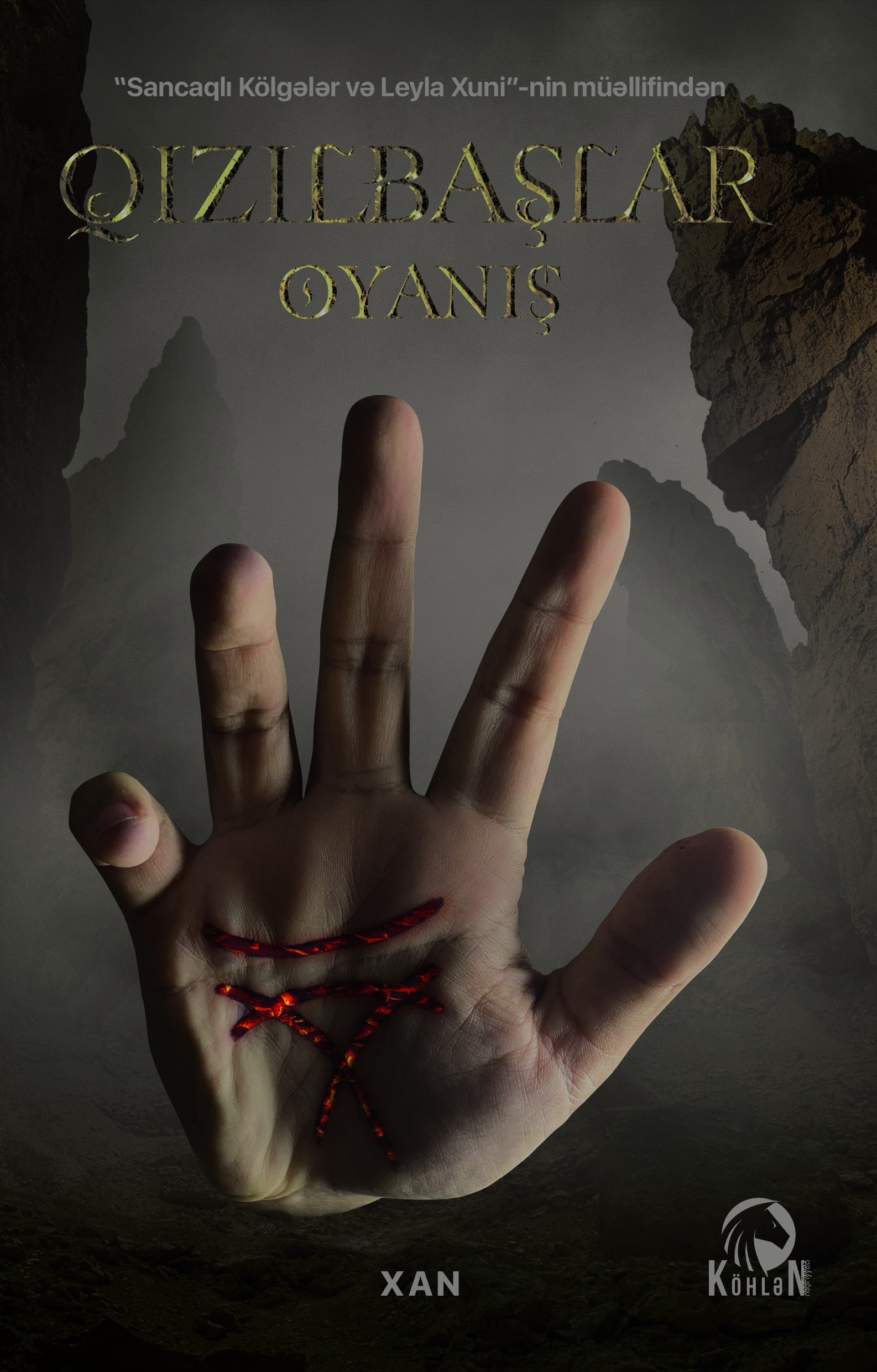
I know Khan Hasan’s talent well and have no doubt about his potential to give contemporary Azerbaijani literature remarkable works. I truly mean that. Yet my thoughts on his The Qizilbash cycle—specifically its first volume, Awakening—are not pleasant even to me. Frankly, I’m disappointed, and a little irritated.
I don’t think writing this novel was especially difficult for the author; the recipe is simple enough. Take a dose of Star Wars, sprinkle in some Matrix, add a pinch of The Lord of the Rings, then pour in every illogical and overblown fight scene from the Marvel franchise, stir vigorously, and, without letting the mixture rest, ladle it hastily into the book with a clumsy, unripe narrative voice—and voilà: 371 pages of The Qizilbash: Awakening
The events take place nowhere—and that seems to be the point, though probably not the author’s intention. Every location is given an oddly forgettable, synthetic name, yet somehow there is still daylight, nightfall, wind, dust, mountains, and technology. Dakaragas, Khimelu, Galatea—these are the ones I managed to retain. The author occasionally uses the word planet, but at one point (apparently on Dakaraqas) he writes that “the Sun was farther away on this planet.” It’s never clear whether the battles all unfold on one world or across several.
Not everything is hopeless. In certain scenes you can sense Khan Hasan’s authentic hand at work. The “awakening of the chosen one” sequence, for instance, is genuinely enjoyable. What I’ve always liked about him is his fairness: he views all his characters through the same lens, never favoring one side. Even Evil, in his hands, can justify itself as convincingly as Good. Their debates, though set between opposing poles, are never one-sided—commendable. The internal logic of events is also handled well, and the aphoristic, slogan-like reflections that punctuate the text often strike the right note. His quasi-scientific explanations for things like teleportation and placelessness are, in their own way, satisfying.
The novel is written in the fantasy genre. Chaos has seized power; demons, vampires, and krons have all bowed before it—only humans refuse. A band of fighters calling themselves the The Qizilbash struggle to survive in the name of righteousness. But as with the geography, the human and nonhuman names are cumbersome and unmemorable. In fact, there are so many of them that even a heroic reader would struggle to keep straight who is who, what is what, and where is where. I suspect even the author couldn’t. And the book is deafeningly loud—drenched in pathos.
In short (Alqarat comes to mind), I didn’t like the novel. Still, read it—it’s unintentionally funny. Almost every page offers some fresh absurdity. As you know, Khan hosts a YouTube program called Khana Kitab, where he dissects flawed books with an ironic touch. I’d suggest he film an episode on his own work—The Qizilbash: Awakening is perfect Khana Kitab material.
Take one scene: a team of warriors hides in a tunnel, planning to leap onto a passing train and blow it up. Hasan writes that the train covers the twenty-five-kilometer tunnel in three minutes. A quick calculation—v = s/t—gives a speed of 500 km/h. That’s 139 meters per second. Nil, a human (not a vampire, not a kron), crouches inside the tunnel and leaps precisely as the train passes beneath him—then, while in mid-air, manages to calculate his landing spot in the first second, adjust his direction over the next two, and drop softly onto the roof before slipping inside. A man! A plain human! Scenes like this abound. The battles between krons and humans are just as nonsensical: fighters with photon torpedoes, light orbs, and laser weapons who still insist on hand-to-hand combat. As in cheap American blockbusters, only the main characters are invincible, while nameless figures die like background noise. Civilian suffering and collateral damage don’t seem to exist—what matters is that nothing bad happen to the author’s chosen few.
What I liked best—and found entirely faultless—is the book’s physical design. Kohlan Publishing has done an excellent job: the cover, paper, typography, and overall handling are beautiful. The novel does have its strengths: the breadth of the invented world, the clarity of description, and the cinematic vividness of the action. But these don’t redeem it. Usually I end my reviews by saying that a book “needs a good editor.” In this case, even that wouldn’t help. For the next edition, I think Khan Hasan would do better to write the novel anew.