The Wooden Letter
On Ulviya Tahir’s Novel
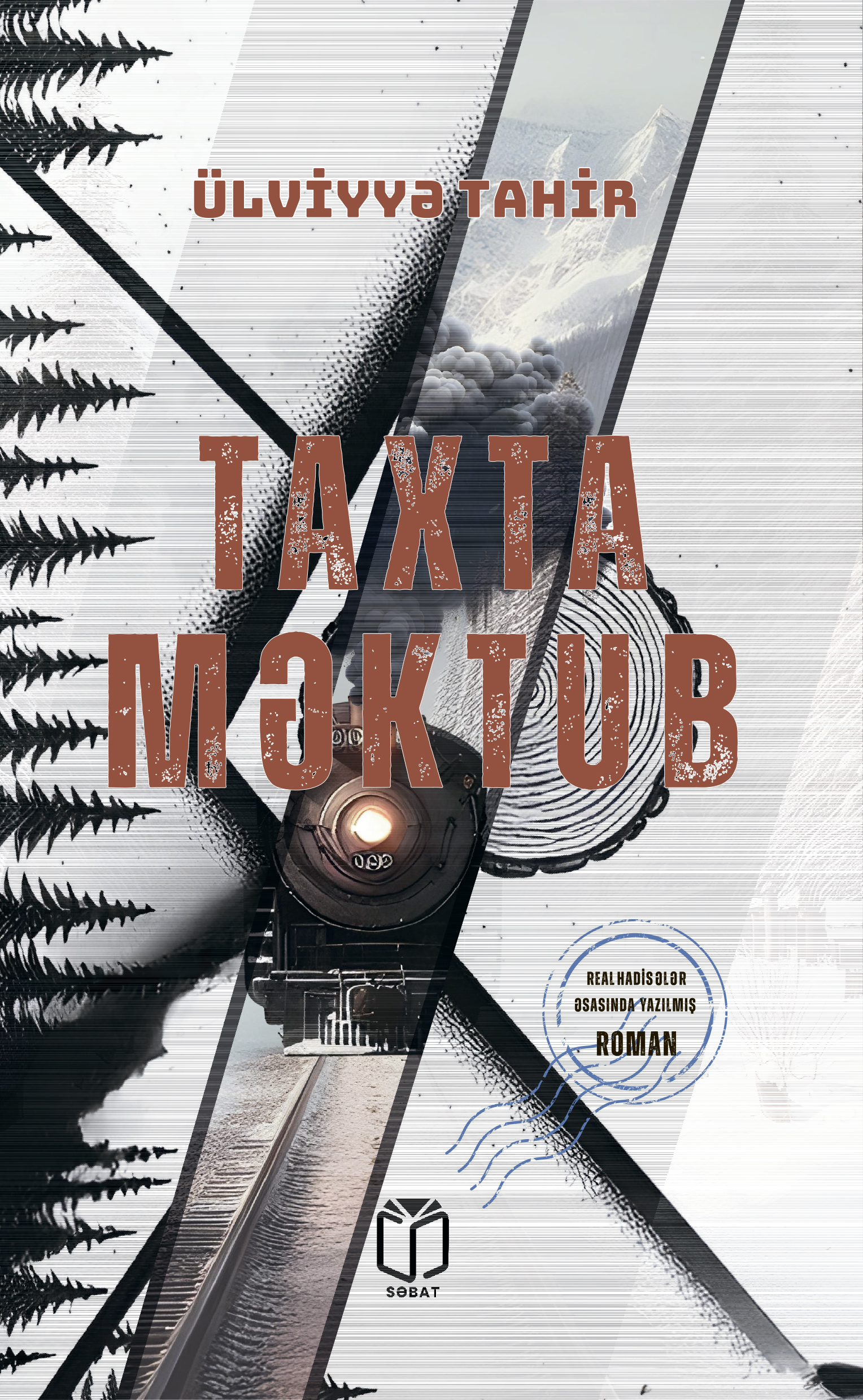
In The Wooden Letter, Ulviya Tahir revisits the early years of Soviet rule — the years of confiscation and repression — through the voice of a child. That choice alone would daunt most writers; Tahir meets it with poise.
At the outset, little Gamar watches as her father is taken away for refusing to “share” his property with the new authorities. Soon come rumors of his death; later, the word Siberia. As events unfold, Gamar begins to grapple with unfamiliar words — death, Siberia, kulak — trying to taste their meanings.
Tahir's phrasing is often quietly arresting: DEATH. I whispered the word. Drew the letter D into myself and sealed my lips with H. I wanted to keep the word inside me, like breath.
To make sense of what surrounds her, Gamar keeps questioning the adults; when no answers come, she feels a kind of physical constriction. As Tahir writes, “When they fell silent, it was as if my height shrank too.
The slim volume is filled with such tender perceptions — moments where smell, memory, and time blur together: What happened yesterday, my father's face, my mother's stubbornness, my grandmother's warning, and the smell of my pillow all mixed together…
Tahir writes with a fine ear for Azerbaijani, drawing on the idioms and archaisms of the era she evokes. At times, though, a sentence's current slackens — usually where emphasis drifts off its logical center. There are a few tense slips as well; minor, but enough to snag the flow. For instance: It feels as though my chest is splitting, my heart beats fast in my ribs, my breath was about to stop.
A more trivial complaint: the type size. This, of course, is Säbat Publishing's doing, not the author's — but I mention it, as the saying goes, “I tell my daughter so my daughter-in-law will hear.” Printing a work of such gravity in large, storybook letters does it no favors. Otherwise, the design and paper are pleasant. Held sideways, the book resembles an envelope — a charming touch I noticed only after finishing it.
Each chapter ends with a word, and the next begins with that same word. The device, I think, adds little. It neither deepens the structure nor feels fully organic. When a chapter closes, for instance, on the word letter, that alone should suffice; beginning the next with “Letter…” reads as redundancy. Tahir herself offers a clear example (The Wooden Letter, 1st ed., 2024): …Perhaps growing up means knowing all the words? Knowing… The next chapter is titled Knowing.
Since the last line already ends on that word, the repetition quickly grows tiresome — and the rule is inconsistently kept anyway.
The entire novel is filtered through a young girl's voice, yet at moments one senses the author forgetting her narrator's age, venturing into reflections too mature for an eight- or ten-year-old. Gamar feels like a child, but her male classmates act like teenagers. None of their ages are stated, yet Gamar is still puzzling over words like courage and to know, while the boys are out picking fights and coming home bloodied.
These are small blemishes and do not touch the book's essence. The emotional clarity of Tahir's message remains intact. Writing about a fatherless child, a family without its head, a people stripped bare, she never coerces the reader's tears. Her language stays simple, supple, and human.
At one point we learn that those exiled to Siberia can send letters home — not real letters, but messages slipped through freight trains. To “receive” one, you have to spend months waiting at the station, standing where the train halts, hoping that fortune lets you catch a word or two. Gamar joins her grandmother in this ritual of waiting. After half a year of coming and going, the letter finally arrives, and they read it.
What does it say? That, I'll leave for readers to discover. But the letter I myself read between the lines was this: “A government that steals fathers from their children can never make those children love it. You cannot take a child's father away and still expect the child to call the one above “dear father.”
For this luminous, quietly devastating novel, I thank Ulviya Tahir once more.