Songs of the Goats
Rashad Safar
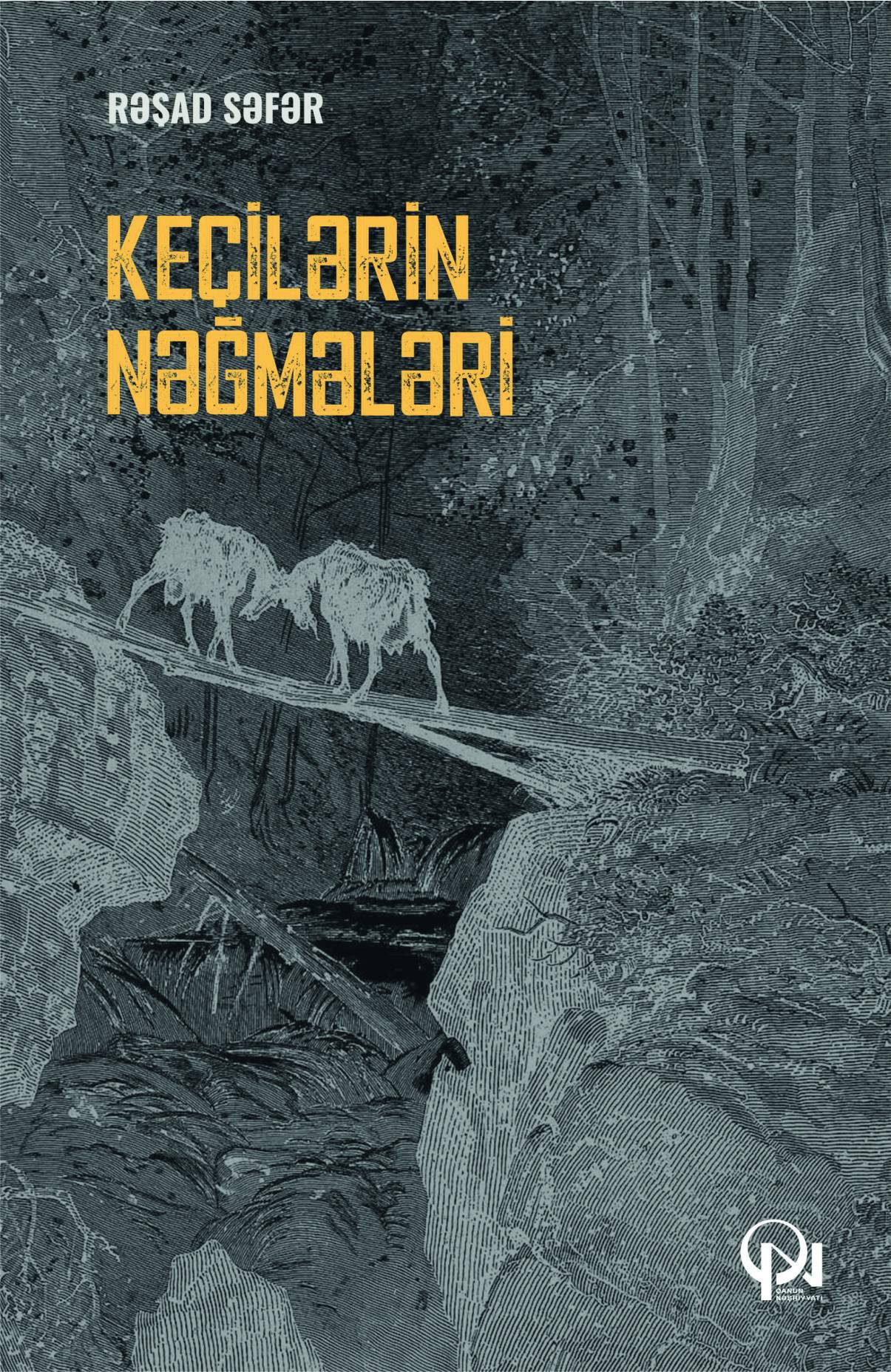
I’ll begin with what, perversely, is the book’s chief merit: its production is abysmal. Qanun Publishing’s habitual standards drag the pleasure of reading down a notch with every page.
Now to the novel itself…
Rashad Safar’s Songs of the Goats opens with a string of episodes that are mutually unconnected—pieces that start out with a pleasing language and style but soon weary the reader with their hollowness. Often they scarcely even have characters; almost none of them lead to any conclusion. And that is how the book ends as well. As I read, I found myself repeatedly asking, “So what?” Who convinced the author that the happenings recounted here (I won’t call them stories: a story is a literary genre with core formal demands; you cannot simply jot down things that did or didn’t happen to a character or to the author and call it a story—at best it’s an anecdote) were of any use to a reader? Who persuaded Mr. Safar that he could put these into a book and sell it for twelve manats? Did the editor, Pərviz Cəbrayıl, not know that—never mind the world—our own literature already offers a wealth of works worth reading, and that there’s no need for this paper massacre of irrelevant anecdotes? And Seymur Baydjan, who is said to have “contributed” to the book—did he not tell the author he wouldn’t pay for such a volume? I truly wonder: is this a novel that Parviz Djabrayil, Seymur Baydjan, and ultimately Rashad Safar themselves would read with delight?
The protagonist, a thirty-five-year-old named Yusif (whom Safar presents as a writer), sets down his memories. At one point (Qanun, 2022, first edition, p. 191) a character known as “comrade investigator” says to Yusif—rightly, in my view: “What memories can a person who hasn’t yet taken shape, who hasn’t matured, possibly write? What important things can he say about the past?”
It seems the author himself sensed the thinness of what he’d written, but, loath to waste his efforts, decided to publish—and thus to waste our time instead. For example, let me ask the author: if we removed the sections titled “Blood,” “Consolation,” “Qıt qaləb tancər” (untranslatable; translator’s note), “Metal Box,” and “Mysticism,” what would the novel lose? In fact, if we deleted the entire first part, what would we fail to understand? To widen the question: Mr. Rashad Safar, if Songs of the Goats did not exist, what would be missing from our literature?
Though the first sentence is hardly auspicious, the opening of the book creates a pleasant impression—you think you’re about to read a very interesting novel. But soon it becomes clear that someone is simply transcribing whatever drifts into his head, and the author knows it yet does nothing to stop it, letting Yusif wear us down with incidents no one needs. In 303 pages, there is scarcely a single writerly insight, striking observation, or fresh angle. Instead, we get a glut of Turkish-style turns of phrase that betray the author’s reading (or viewing habits), sentences that struggle to reach their point and chew the same idea over and over, and memories that connect to nothing else in the novel. As for the dialogue—better left undiscussed. In places two speakers’ lines are stacked in the same paragraph: no speaker tags, no quotation marks—you can’t tell who’s saying what.
And instead of simply writing “so-and-so said,” the author tries to “do writing,” building dialogue tags like this—“…—the woman said repeatedly, there among the blossoming trees that day” (Qanun, 2022, first edition, p. 287)—which makes one’s skin crawl.
Since I’ve said “do writing,” I’ll add this: regrettably, “doing writing” has become fashionable among us of late. Just as being an actor is not the same as “doing acting,” being a writer is not the same as “doing writing.” Those we hope will be writers spend their days on social media “doing writing.” Their output is before us. My wish for our authors is that they stop “doing writing” and instead be writers: not statuses, but books; not poses, but works.
Note: I don’t wish to embarrass the author by dissecting the book detail by detail. Anyone who’s interested can examine it with me—in its minutiae and its depths—and see that this novel is, quite simply, unnecessary.